Crime-Free Housing? A council candidate's criminal tenants


"Tough on crime" City Council candidate Gary Kespohl discusses his tenants and their crimes  Part One
 
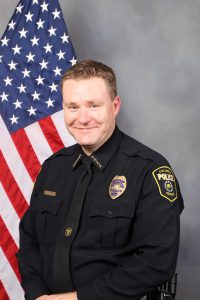
COLUMBIA, 3/9/10  (Beat Byte) --  For the second time in three years, Third Ward Columbia City Council candidate Gary Kespohl (left) has staked his campaign on fighting crime. 
 
"Gary is tough on crime," reads a page from Kespohl's campaign website.   "There were almost 3,000 police calls to Ward 3’s White­gate area alone since Jan­u­ary 1, 2009.   When it comes to keep­ing our neigh­bor­hoods safe, I stand with our cops in crime fighting."    
 
At the January 29, 2010 Muleskinners forum, "Gary Kespohl attacked opponent Karl Skala’s commitment to reducing crime" , the Columbia Daily Tribune reported.   "Kespohl put his foot down on the issue of crime when he offered support for downtown surveillance cameras and red-light cameras as law enforcement tools."   
 
But as the owner and manager of several dozen rental properties in Columbia and Boone County, Mr. Kespohl doesn't seem to be putting his foot down about crime at all.   Columbia police officers and Boone County Sheriff's deputies have arrested and Boone County courts have convicted his tenants dozens of times in the past decade, for burglary, assault, sodomy, stealing, illegal immigration, child endangerment, drugs, resisting arrest -- even failure to register as a sex offender. 
 
Mr. Kespohl has also filed roughly two dozen lawsuits against tenants for failure to pay rent and/or property damage during the same period, statistics that suggest flawed or lax tenant screening procedures.   
 
City policy regards landlords renting to criminal offenders as contrary to community safety.  So-called "nuisance rental property ordinances" that list crime as a "nuisance activity" join Columbia police department (CPD) programs like Crime Free Housing and Neighborhood Watch to reduce crime and criminals on rental property. 
 
Because most criminal tenants live in low-income neighborhoods, awareness of the problem has been slow to build.   But build it has.  Tenants with long and violent rap sheets renting from landlords such as Wayne Fenton in North Central Columbia -- where Mr. Kespohl sits on the neighborhhood association's board of directors -- captured the attention of the Columbia City Council in Nov. 2008: 
 
And over 100 people -- landlords, tenants, public officials, police officers, and interested citizens -- attended a December 2009 "Landlords Against Crime" summit at the Youzeum.  Renting to offenders was roundly condemned, and several speakers -- including CPD Crime Free Housing director Tim Thomason -- presented on ways to screen out criminal tenants. 
 
Ironically, Mr. Kespohl himself has been front and center on this issue.  He made cracking down on "nuisance properties" a campaign centerpiece during his 2007 city council run.  Touting his business acumen as a rental property manager, he warned on his campaign website against rental properties that "serve as the locations of perpetual nuisance activities" and advocated for an "improved police presence, increased enforcement of codes and the new nuisance property laws." 
 
But that didn't square with a former social worker who worked around Mr. Kespohl's rental properties.   Asking that her name be withheld from publication, she came forward during his first campaign. 
 
"I had no idea Gary owned these rentals.   When I did service coordination, this was one of the saddest areas I have ever seen," she explained.  "The properties are in poor repair, and renters reported that repairs were never made.  I worked with low income mothers who had gotten to the point that this was the only place they could live."  
 
Although this story surfaced late in the 2007 campaign and made its way to the Columbia Daily Tribune, sources there say that while Trib reporters wanted to run it, their news editors killed it, claiming that "every landlord has some problems with property and tenants." 
 
But as a city council candidate, Gary Kespohl isn't every landlord, and his problem tenants stand out, so much so that one wonders how he and his family cope with the stress -- and the business risk -- of dealing with so many offenders, so much of the time. 
 
To find out, the Columbia Heart Beat interviewed Mr. Kespohl.   Though he did not answer every question, he was generally candid, and did provide information about almost every tenant.   To provide greater accuracy, we removed police and sheriff arrest records Mr. Kespohl disputed that we could not also confirm with another source, and cross-checked courthouse records at Casenet, where in many cases the tenant profile only grew more troubling.   
 

Columbia Heart Beat (CHB):   Many of your tenants had/have criminal histories.   Case in point:  John William Key, Jr. who was arrested while living at your 4700 Pierre Drive property for failure to register as a sex offender in 2005.   He had been arrested in 2002 for the same offense, and since 1986 had been convicted 14 times, of offenses ranging from burglary, assault, property damage, and in 1991 for 1st degree Felony Sexual Abuse.   As of April 2009, Key was still listed as living at 4700 Pierre, where it appears he's now fighting creditor lawsuits.  That address also shows on several of his convictions. 

Why rent to a repeat criminal offender like John William Key, Jr.?
 
Gary Kespohl:  John William Key, Jr. had various problems as a young man.  We investigated his background and talked to John and decided to give him a chance.   During his occupancy with us, he has worked for the City of Columbia and currently works for the Central Missouri Food Bank.  John has become a good citizen of Columbia and remains a tenant without incident.  John's name was not on the sex offense registry when we first rented to him, but a change in Missouri state law added his name to that list.
 
 
CHB:  Here's the rap sheet on Kenneth Charles Brunner, who listed your 4712 Pierre Street property as his address.   He's been convicted in each instance, several times just in the past three years, including for drug possession and being a "persistent offender," all while residing at your rental.  Why rent to a persistent offender like Kenneth Charles Brunner?
 
Kenneth Charles Brunner, 27, of 4712 Pierre St., third-degree domestic assault.
Kenneth Charles Brunner, 26, of 4712 Pierre St., driving while intoxicated - persistent offender
Kenneth Charles Brunner, 26, of 4712 Pierre St., driving while license is suspended or revoked
Kenneth Charles Brunner, 25, of 4712 Pierre St., second offense of driving while intoxicated
 
Gary Kespohl:  Kenneth Charles Brunner was never a signer on our lease.  He moved in with his mother during her lease and she paid all rents due.  He was evicted when we discovered his mother had moved to New Mexico.
 
 
CHB:  What impact, if any, do you think renting to offenders has on neighbors, particularly children? 
 
Gary Kespohl:  Did not answer. 
 
 
CHB:   Are you aware that if one of your tenants -- say John William Key -- were to re-offend on or around your property, you could be liable? 
 
Gary Kespohl:  Did not answer. 
 
 
CHB:  Here's what the records show about confirmed tenants of your property at 753 Demaret Drive.   What do you want voters to know about the individual circumstances here?
 
Jennifer Thomas, 27, of 753 Demaret Drive, failure to appear in court
Jennifer Thomas, 27, of 753 Demaret Dr., failure to appear in court, failure to follow judge's orders
Jennifer Thomas, 27, of 753 Demaret Drive, three counts failure to appear in court, failure to follow judge's orders

Jamica Lastar Washington, 29, of 753 Demaret, four counts of failure to appear in court
Alissha M. Vazquez-Gonzalez, 24, of 753 Demaret Drive, stealing, failure to display plates on auto
Manuel Secundino-Barrera, 21, of 753 Demaret Drive, resisting arrest, obstruction of government operation
Luis Alberto Aguila-Yarnal, 21, of 753 Demaret Drive, driving while intoxicated, failure to display proof of insurance, driving unlicensed vehicle, failure to stay in traffic lanes
 
 
Gary Kespohl:   Prior to occupancy, Jamica Lastar Washington had a rent and possession (eviction) lawsuit and a traffic ticket.  During occupancy with us, she had a traffic ticket and was evicted for rent and possession.  Prior to occupancy, Alissha Vazquez-Gonzales had a civil suit and a traffic ticket.  During occupancy, nothing. 
 
Prior to occupancy with us, Manuel Secendino Barrera had a DWI.  During occupancy, nothing.  Prior to occupancy, Luis Alberto Aguila-Yarnal had nothing.  During occupancy, he had a traffic ticket and a paternity suit. 
 
Prior to occupancy, Jennifer Thomas had a bad check charge.  During occupancy, she had a civil suit and a stalking charge.
 
 
CHB:  Here's what arrest records show about confirmed tenants of your property at 755 Demaret Drive.   What do you want voters to know about the individual circumstances here?

Stacy Hope Mathis, 45, of 755 Demaret, third-degree domestic assault

Edgar Eduardo Riojas-Olivares, 23, of 755 Demaret Drive, driving while intoxicated
Edgar Eduardo Riojas-Olivares, 22, of 755 Demaret Drive, misdemeanor warrant.
Edgar Eduardo Riojas-Olivares, 19, of 755 Demaret Drive, driving while license is suspended or revoked
Edgar Eduardo Riojas-Olivares, 17, of 755 Demaret Drive, first-degree burglary
Edgar Eduardo Riojas-Olivares, 17, of 755 Demaret Drive, attempted first-degree burglary
 
Gary Kespohl:  Prior to occupancy, Stacey Hope Mathis had a civil suit.   [No comment on Edgar Eduardo Riojas-Olivares.]   
 
 
CHB:  Here's what arrest records show about confirmed tenants of your property at 757 Demaret Drive.   What do you want voters to know about the individual circumstances here?

Lester Craig Cupp, 21, of 757 Demaret Drive, failure to follow judge's orders
Thalessia Leanne Hayes, 21, of 757 Demaret Drive, misdemeanor warrant.
Jason Edwin Cox, 25, of 757 Demaret Drive, third-degree assault
Jason Edwin Cox, 25, of 757 Demaret Drive, third-degree domestic assault
 
Gary Kespohl:  These individuals never signed a lease, and if any of them were living in the unit, they were unknown to us.  They may have moved in with someone or gave the police an incorrect address.  
 
Editor's note:  Casenet shows criminal convictions for Jason Edwin Cox, Lester Craig Cupp, and Thalessia Leanne Hayes, all residing at 757 Demaret Drive
 
NEXT TIME:  Mr. Kespohl discusses more tenants, explains how he screens his rental applicants, and answers questions about Columbia's Crime Free Housing program.

TRIB INTERVIEW TURN DOWN: Gets mayoral candidate big response


COLUMBIA, 3/5/10  (Beat Byte) --  Mayoral candidate Sid Sullivan's decision to turn down the obligatory "endorsement interview" with Columbia Daily Tribune publisher Hank  Waters has received a big response from readers and journalists alike.  Sullivan (left, Missourian photo) explained his decision both in letters to Mr. Waters; the Columbia Heart Beat; and the Columbia Missourian:
 

Mr. Sullivan cited Mr. Waters' behind-the-scenes leadership of a move to use eminent domain on two downtown landowners for a new State Historical Society museum.   A museum board member, Waters "carefully orchestrated Trib editorials" about the matter while failing to disclose his behind-the-scenes involvement, practices Columbia Missourian columnist and journalism school professor George Kennedy also condemned, and that Sullivan views as tainting the entire editorial process. 
 
Kennedy also weighed in on Sullivan's decision.  Agreeing that "when a publisher acts as a power broker, he owes the public more disclosure than Hank deemed necessary," Kennedy wrote "somewhat reluctantly, I rise in Hank’s defense," recapping the 80-year-old publisher's long career. 
 
Ironically, Kennedy noted that -- just as Sullivan refused to engage with Waters -- Waters, in turn, was refusing to engage with Kennedy.  "I called [Hank Waters], and once he figured out my purpose, he said I should put him down for a 'no comment,'" Kennedy wrote.   "He does intend to publish Sid’s letter, he said.  And he did confirm that it’s rare for a serious candidate to refuse to meet with him." 
 
Other responses to Sid Sullivan's decision
 
It seems like we have skipped over what might be the REAL issue here. Perhaps it's not about the interview process, but about not being roped into the back room power plays. 
 
Hank Waters has become our own little hometown Hearst (or our hometown Rupert Murdoch for the younger people) who evidently abuses his position as a publisher and journalist. I applaud any politician willing to distance themselves from this bad influence.
 
When I purposely canceled my subscription many months ago, the woman at the Circulation desk asked why.  I mentioned not wanting to financially support Hank because of his involvement in things like the eminent domain issue.
 
She said she didn't think there was any such issue and would have somebody get back to me. No one ever did.
-- Greg Baka, Columbia
 
 
This matter of press-public-electoral process is central to a healthy civic life and the free flow of sound information, discussion, and debate. 
 
Good government and a healthy electoral process are immeasurably strengthened in accuracy and justice by an independent, responsible, thoughtful, and scrupulously self-questioning free press.  The Tribune and we, the readers, should hold this newspaper always accountable to these highest standards.
-- Catherine Parke, Columbia
 
 
Good for Sid Sullivan!   Someone finally stands up to Hank Waters, the bully of our local press, during elections in particular.  I talk to many people who feel the same way.  They are very frustrated with the Tribune's one-sided editorials and complete LACK of investigative reporting.  Of course, you wouldn't expect Mr. Waters paper to question his involvement in the eminent domain issue last year.  

Unfortunately the publisher of the Tribune and his followers are way too smug to sense the community's wariness of his "confluence" of interests.   As a community, we can only vote with our pocketbooks and cancelled subscriptions. -- Traci Wilson-Kleekamp, Columbia
 
 
I find Mr. Sullivan's "in your face" independence intriguing, and certainly an asset for an important electoral position.  -- Pat Etienne, Columbia
 
 
I'm not convinced this is a smart strategy.  I certainly understand it.  When one feels they haven't been treated fairly in the past, there's a natural instinct to no longer subject themselves to more abuse.  I also understand the pre-emptive strike logic:   If Sid doesn't think he's going to get Hank's endorsement, then maybe he thinks it's better to turn down Hank's interview request.

But to me, this always comes across as someone being a little immature and not able to face their harshest critics.  Whether it's George Bush not wanting to meet with the NAACP or Sal Nuccio not wanting to meet with anyone, I don't know that it's necessarily going to win you over more voters.

I more admire someone like Karl Skala knowing he's walking into the lion's den at The Chamber and handling all their tough questions.   Politics is a rough sport and I think more voters will be turned off than appreciate Sid's decision.
-- Brian Ash, former 6th Ward City Councilman, Columbia
 
 
Mr. Sullivan is accurate in his assessment of Hank Water's contradictory justifications for his 'interests' in civic matters.   The only consolation is that the citizens of Columbia are well aware of Mr. Water's prejudices and have learned to temper them into any argument that he prints.  We the public simply use Mr. Water's perspective as a benchmark -- left of center, irrational, opinionated and subjective.   We defer to the content experts on these topics rather than to Mr. Waters and his amazing technicolor ink pen. -- Christina Fey, Columbia
 
 
I applaud Sid for standing up to power and giving his reasons for doing so.  Mr. Waters interviewed me in 2004 when I ran for Mayor of Columbia.  At the interview, we had a very long discussion; he seemed to have read most of the materials I had sent him; and, with one minor exception, his editorial endorsing Mr. Hindman very accurately reported what I had said and stood for, in so far as Mr. Waters understood what I said and stood for.
 
I find it sad that Mr. Waters has either declined so far, so fast in his journalistic skills or has chosen to do so.  -- John G. Clark, J.D., CPA, Columbia
 
 
I've been on the other side of the desk, and while I didn't get the endorsement, all those years ago when I went crazy and ran for office, I didn't feel the questions or the eventual discussion of the candidates and endorsement was unfair.  Sid comes off like he's trying to hide something, just as [mayoral candidate] Sal Nuccio does.  I'm VERY uncomfortable with candidates, and Nuccio's not the first, who avoid all public forums like this.  What is he afraid of being asked?
 
As for the influence of Hank, I think of two things.  "Don't pick fights with people who buy ink by the barrel."  And, having worked on several campaigns, there are those who feel that not only does his endorsement NOT win you the race, but some even think Hank's endorsement can harm you. -- Darren Hellwege, KBIA, Columbia

FROM NYC: To the UK, Columbia rock band on a roll

COLUMBIA, 3/4/10  (Beat Byte) --  On the overseas release of their second album, "It's Frightening," six piece Columbia, Missouri-born rock band White Rabbits is getting some heady play in the U.K. 
 
"White Rabbits thundered and crashed their way to the end of a European tour with a dramatic set at the ICA that had more in common with a herd of stampeding cattle than anything rabbit-like," said the Times of London in a review March 1.  "The six-man group hails originally from the University of Missouri in Columbia, but are now based in Brooklyn, New York, which has proved to be a suitable location for launching their highly percussive brand of indie rock into the world.  Here to promote their impressive second album, It’s Frightening, the band threw themselves into the performance with an intensity that was all-consuming." 
 
The new album, the band's second, "is by far the best release since before the Christmas slump and at only half an hour long leaves you wanting more," writes reviewer Leigh Sanders for the Daily Echo, a U.K. newspaper staple since 1888.  "A top album." 
 
"With their thumping new single 'Percussion Gun' doing exactly what it says on the tin, New York-based White Rabbits are rapidly adding to their fanbase and whipping them into feverish expectation over sophomore release, It’s Frightening," writes reviewer John Johnson for The List, Scotland's largest events and entertainment magazine. 
 
Johnson interviewed White Rabbits band member Greg Roberts, who says the band toured for two years with their first album, Fort Nightly, which Roberts said took the band nearly a year to complete.  A band in the tradition of Radiohead, Madness, and The Specials, Roberts describes White Rabbit's sound as "reggae, dub, ska [reggae sub-genres].  Just anything with interesting rhythms; Ethiopian, West African, girl group, R&B, rock, just something different."
 
And, of course, Columbia gets a big mention.  "The band itself came together in Columbia, Missouri, which is a university town," Roberts said.  "I had been playing in a punk band with Alex, and working at a record shop with Steve, and grew up with Matt and Jamie in St. Louis.  I've known Jamie since I was six years old, actually. We grew up on the same street.  Anyway, we had all either finished school or were simply ready for a change of pace, so we jumped in our van and drove East."


IN COLUMBIA: An iconic sculpture shows artistic side of Black History

by Mike Martin for the Columbia Business Times
 
When Parkade Center Manager Ben Gakinya asked me to write about what black history means to me for a mall collage in honor of Black History Month this February, Mary McLeod Bethune—who overcame her parents' slavery to establish an all-black women's college and become one of the country's greatest educators—came to mind.
 
Remembering Bethune reminds us that black history in the United States isn't just about struggle.
 
It's also about triumph, particularly the flourishing of ideas, culture, art, science and education that marked a decades-long interlude between slavery and segregation. The Harlem Renaissance exploded onto the American scene, and a larger Black Renaissance nationwide gave America doctors, lawyers, preachers, teachers, painters, writers, politicians, philosophers and educators where enslaved field hands had stood before.
 
Immortalizing that period—from about 1870 to 1930—became the life's work of sculptor Isaac Scott Hathaway, (right) who left a masterpiece at Douglass High School in Columbia: a bronzed ceramic bust of the abolitionist Frederick Douglass.
 
Hathaway sculpted dozens of black leaders with exquisite care. His sculpture reminds of that intellectual and spiritual renaissance and the way it lighted for subsequent generations, one of which would include America's first black president.
 
Chosen calling
 
Legend has it that 9-year-old Isaac was touring a Cincinnati museum with his father in 1883 when he discovered a terrible truth: Black history didn't exist.
 
"I was looking for a statue of Frederick Douglass," Hathaway told his father. "My teacher said only the truly great are perpetuated in stone and bronze, and Frederick Douglass was a great man."
 
"That may be," his father said. "But we’ll have to grow our own sculptors."
 
Working feverishly to grow into that role, Hathaway studied at the New England Conservatory and eventually graduated from his first art studio—a converted chicken coop—to important and fascinating commissions.
 
In 1904, Kentucky attorney William Marshall Bullitt, who went on to become U.S. attorney general, hired Hathaway, a Lexington, Ky., native, to create the largest plaster crime scene model ever used in a court of law up to that time.
 
Eight years later, the Smithsonian Institution's National Museum hired Hathaway as its official sculptor. Pathe, the black-and-white movie newsreel company, captured Hathaway molding a reproduction of the human fetal brain and advertised the film as "the first motion picture of a black professional at work."
 
Through the Isaac Hathaway Afro Art Company, he hand-produced limited edition busts of prominent African Americans. At the height of Hathaway's fame, President Harry S. Truman commissioned Hathaway to create 50-cent coins "commemorating the life and perpetuating the ideas of educator Booker T. Washington and scientist George Washington Carver."
 
Today, Hathaway sculptures memorialize prominent African Americans such as NAACP founder W.E.B DuBois, poet Paul Laurence Dunbar and Bethune in the Isaac Hathaway Art Institute at the University of Arkansas, Pine Bluff and the Isaac Scott Hathaway Museum in Lexington.
 
Back to school
 
As a 2005 school board candidate, I visited once-segregated Douglass High School, where principal Brian Gaub (left, with bust, Columbia Tribune photo) showed me what he called "one of the nation’s oldest pieces of African-American art."
 
I hadn't heard of Hathaway, but I instantly recognized something special—a nearly 3-foot tall, masterfully detailed bust of Douglass that had been in the building "for as long as anyone could remember," Gaub said.
 
We carefully moved the glass display case away from the wall and saw the inscription: "Isaac Hathaway, 1918" and © —the international copyright symbol.
 
Frederick Douglass High school was built in 1916 when Hathaway was teaching in nearby Arkansas, but how the bust —one of only three he made—ended up in Columbia remains a mystery.
 
To confirm its authenticity, I sent pictures to Pennsylvania State University African-American art expert Joyce Henri Robinson; Howard University art history Professor Tritobia Hayes Benjamin; and Henri Linton, curator of the Hathaway Museum at the University of Arkansas, Pine Bluff.
 
"It was probably commissioned by someone connected to the high school," Linton told me. 
 
Hathaway biographer Odelia Walker sums up the great artist's life: "Sculpture records the deeds of nations and individuals. Isaac Hathaway understood this and created for us a heroic record of distinguished African Americans. In the process, he left a legacy for and about all races."

UPCOMING HATHAWAY EXHIBIT:

CAMPAIGN FINANCES: Wade, Sessions, Skala lead

COLUMBIA, 3/2/10  (Beat Byte) -- Several local candidates have filed campaign finance reports with the Missouri Ethics Commission.  So far, Columbia mayoral candidate Jerry Wade leads, with collections totalling $21,381.

Wade's biggest contributors include former Missouri state representative Tim Harlan ($200) and former state rep candidate Candace Iveson ($200).  Mayoral candidates Bob McDavid ($6,080) and Paul Love (less than $500) trail.

School board candidate Jonathan Sessions (left, Missourian photo) leads his opponent Phil Peters, with $10,793 to Peters' $2,533.  Sessions largest donors include Russell Potterfield ($500); pharmacist Bob Kilgore ($250); and his own firm, Tech 2 Consulting ($950). 

In Columbia City Council races, 4th Ward candidate Sarah Read reported $5,745, with a large donation from MU student Molly Read ($1,000).   3rd Ward candidate Karl Skala reports $7,133, with a large donation from Deanna Walkenbach ($400).     

Boone County Commission candidates J. Scott Christianson and Bondi Wood have filed organization papers only.   Other candidates had not yet filed as of today.    

CLICK FOR CAMPAIGN FINANCE REPORTS:

Jerry Wade for Mayor


CONTROVERSIAL ORDINANCE: Tackles city manager seating

COLUMBIA, 2/28/10  (Beat Byte) -- A "heated discussion" among Columbia City Council members about whether to seat city manager Bill Watkins (left, Maneater photo) or the Mayor at the center of the council's semi-circular meeting table -- where Watkins and other city managers have traditionally positioned themselves -- has become Council Bill R50-10, which lets the Mayor make the decision.
 
Questions about changing the long-standing seating arrangement occurred after council members touring the new council chambers spotted name placards once again placing Mr. Watkins at the center of the new council table, multiple sources tell the Heart Beat. 
 
similar discussion last year saw Columbia Public Schools Superintendent Chris Belcher remove himself from the center school board table seat.
 
"The superintendent’s central position at the legislative table raises an important question:  Is the school board a step up in the chain of command, in charge of the superintendent, or not?" wrote Columbia resident Ken Green in an October 2008 Columbia Daily Tribune editorial.   Green noted the strong psychological impact of placing a non-voting, paid chief executive in the center of an all-volunteer legislative body, precisely the same situation that faces the Columbia City Council. 
 
School board member Ines Segert agreed:  Where the superintendent sits does influence meetings, the Tribune reported.  "It’s important that board members lead the discussion," she explained.  After an informal poll of school board members concurred, school board president Jan Mees replaced the superintendent at the center of the legislative table during Dr. Belcher's first meeting in August. 
 
Fretting about a power-sharing arrangement that has proven both lopsided and embarassing over the past year, Columbia City Council members eager to see the same arrangement started a similar discussion. 
 
Council members suggested allowing the Mayor to decide the seating arrangement during an informal gathering at the new city hall building when a full quorum was allegedly present, but not allowed to decide policy for Sunshine Law requirements.  
 
The discussion apparently heated up, sources say, when it became clear Mr. Watkins would not move from the center of the table voluntarily.   Superintendent Belcher said his seating "was not an issue" and moved aside without a formal board policy vote. 
 
To formalize the Mayor's role in making the decision, Third Ward Councilman Karl Skala introduced the idea at the Council's Feb. 15 meeting.  It now appears on the Monday, March 1 council meeting agenda under "New Business."  
 
RELATED:
 

RUMOR HAS IT: "Giant" liquor store planned for Brady's Glass Bldg?

COLUMBIA, 2/27/10  (Beat Byte) --  Now that it's empty, rumors are swirling that the old Brady's Glass building on the corner of Providence and Ash streets is destined to become a liquor store.
 
"I've heard the same rumor," said building and Brady's Glass owner Jerry Brady, who confirmed the sale of his building but said he doesn't know what the new owners -- the Patel Family that owns Eagle Liquor on 1-70 Drive SW -- plans to do with it.  "It's nothing I can control, and it's really none of my business," Brady told the Heart Beat. 
 
Asking that her name be withheld, a nearby neighbor expressed concern.  "Great!  Just what Columbia needs -- another liquor store on Providence," she said.  "Across from a high school, a park, and a housing project."  [Douglass High School, Douglass Park, and Columbia Public Housing].
 
Brady told the Columbia Heart Beat that rumors his own business is going under are completely false.  "We're just relocating, and we currently have our eyes on four possible different buildings, all in Columbia," he said. 
 
RELATED:
 
 
NOLAN LEAVES EAGLE:  Popular Columbia radio host heads to Syracuse
 
COLUMBIA, 2/24/10  (Beat Byte) --  Popular Libertarian radio talk show host and one-time presidential candidate Gary Nolan -- an afternoon staple for the past few years at Columbia's KSSZ 93.9 The Eagle FM -- is leaving Columbia for Syracuse, New York.
 
Nolan (right) leaves his show -- The Drive with Gary Nolan -- for WLTI/105.9 in Syracuse for the 4-7 p.m. shift.   Other hosts at WLTI include Dave Ramsey, Michael Smerconish and Mark Levin. 
 
RELATED: